Pilot Perspective: How Drones Assist in Hurricane Recovery
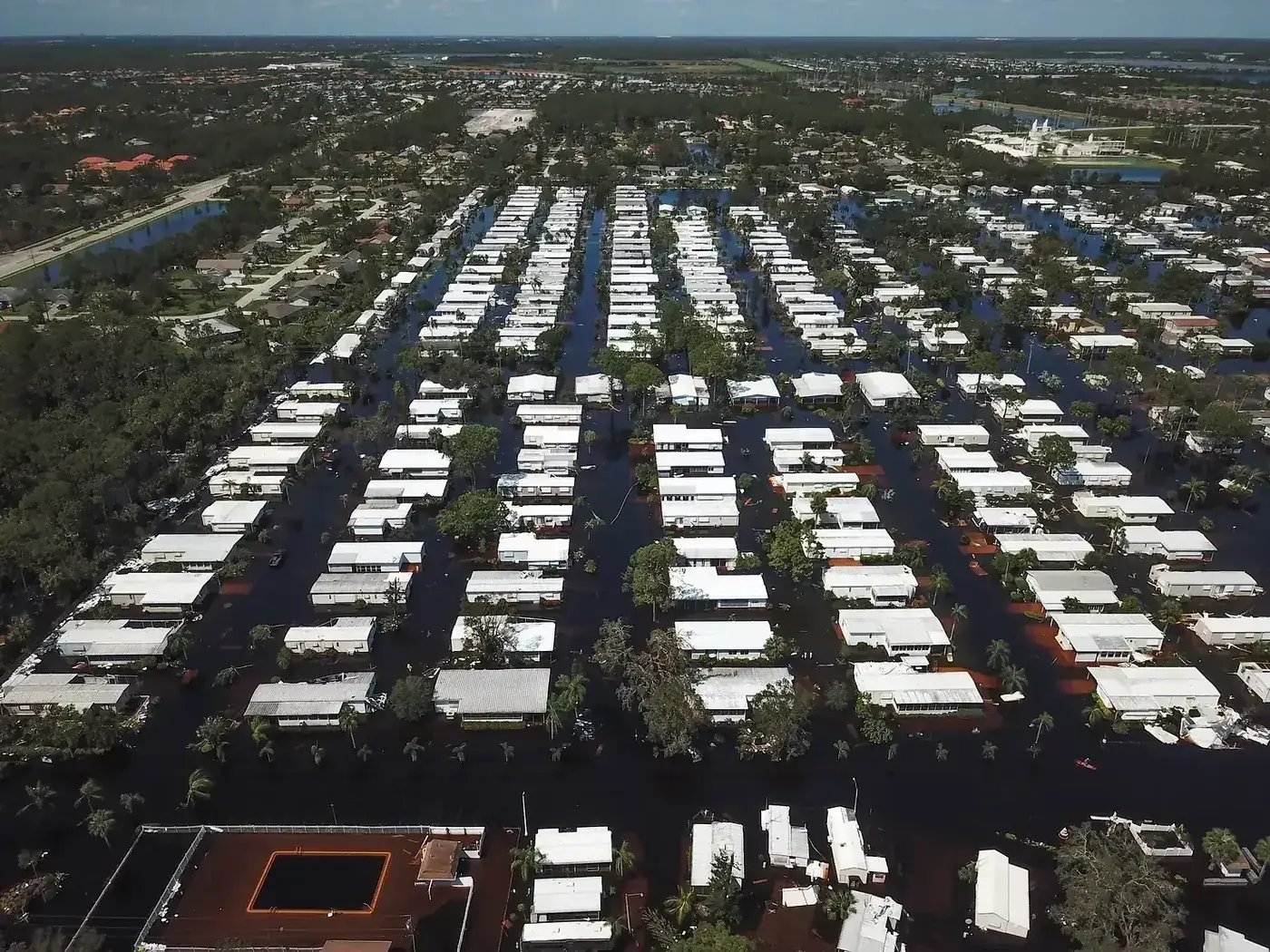
Speaking from my own experience, native Floridians have the tendency to view hurricane season as nothing more than a sensational news period for their local weatherman. Sure, we all stock up on water, non-perishable foods, alternative light sources, and maybe add a few precautions to our homes; but 2022's Hurricane Ian showed a lot of us that being over-prepared is a small price to pay for our safety. And with a storm of this scale, finding safety in the aftermath is just as important.
The response in the immediate weeks after a natural disaster is of vital importance for many who find themselves in dangerous situations. The first steps are identifying people in need, getting them the resources that they need, and limiting the hazards in their surroundings.
Drones are utilized in a number of natural disaster relief efforts, from surveying large areas of land in order to identify areas of highest urgency, to search and rescue, to providing relief aid. With their relatively low cost compared to deploying helicopters for aerial reconnaissance, drones can be sent out in large numbers to find and assist those in need while limiting risk to the first responders on the ground. If intel is needed in an extremely dangerous environment, such as that of the Fukushima Daiichi Nuclear Accident, using remote tools is necessary to avoid sending someone directly into harm's way. They also play a large role in damage assessment, inspecting the infrastructure of buildings and power lines and ensuring that unsafe situations are identified as soon as possible.
FAA administrator Michael Huerta reflected at InterDrone on the hurricane damages of 2017, the costliest hurricane season in the U.S. to date, saying, "Essentially, every drone that flew meant that a traditional aircraft was not putting an additional strain on an already fragile system. I don't think it's an exaggeration to say that the hurricane response will be looked back upon as a landmark in the evolution of drone usage in this country." Hurricane Harvey's devastating floods pushed for more widespread adoption of drones, and their deployment has since become standard procedure. The relief efforts that can be equipped to unmanned aircraft are impressive in their present state, but further studies into automated flight, extended flight time, and higher payload capacities will prove even more helpful to survivors and first responders alike. Every response that can be made remotely in these situations means more brave first responders ready to act where they are most needed.
Following Hurricane Irma in early September 2017, Wade Hartley joined the mass of Part 107 pilots deployed across Florida to determine the environmental impact caused by the category three storm. Wade spent the majority of this experience inspecting power lines as part of FPL's effort to identify where repairs were needed, as well as to address the potentially life-threatening situation of a downed power line. Hartley Aerial has continued to provide its services following every major Florida storm, and we'll be ready to fly again after the next.
Sources
- Ciobanu, E. (2022, January 31). Best drones for natural disaster response. Dronefly.
- Drye, W. (2021, May 3). 2017 hurricane season was the most expensive in U.S. history. National Geographic.
- Fukushima Daiichi Accident. World Nuclear Association. (2023, January).
- Huerta, M. (2017). InterDrone keynote. Las Vegas; Federal Aviation Administration.
- McNabb, M. (2017, September 19). FAA: Hurricane response a "landmark in the evolution of drone usage." DRONELIFE.
- Murphy, R. (2015, September 16). Drones save lives in disasters, when they're allowed to fly. Space.com.
- National Oceanic and Atmospheric Administration, National Centers for Environmental Information, & National Hurricane Center. (2023). Costliest U.S. Tropical Cyclones.
- Singh, I. (2022, October 3). How drones are helping with Hurricane Ian response and recovery. DroneDJ.